


Intel’s next-gen Atom ‘Pine Trail’ platform not delayed [Video]
July 30, 2009 at 11:38 am
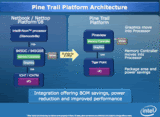 Intel’s Mooly Eden, general manager of the Mobile Platforms Group, refuted recent speculation that its next-generation Atom platform dubbed Pine Trail has been delayed. “Pine Trail is on schedule and you can quote me on that” said Eden at the Intel Technology Summit in San Francisco.
This would mean that they are still on track for the new chips to be released in the fourth quarter of this year. He also confirmed that demos of Pine Trail and the Pineview processor will be present at the Intel Developer Forum (IDF) in September. Read more
Intel’s next-gen Atom ‘Pineview’ processor delayed to H1 2010?
July 21, 2009 at 5:20 pm
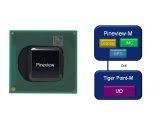 Intel’s Pine Trail platform that incorporates the next-generation Atom ‘Pineview’ processor may be delayed until early next year to keep manufacturers happy. According to a report from Digitimes Research senior analyst Joanne Chien, the move would be made to let the netbook market ‘settle’ following strong shipment sales.
Her analysis suggests that worldwide netbook shipments will peak in the third quarter this year at 8.3 million units before falling marginally to 8.2 million units in the fourth quarter. She says that Intel has delayed the launch of the new N450 processor to get the most out of the current N270/N280 Atom processors and help clear inventory before the new chips are introduced. Read more
First Intel N450 ‘Pineview’ netbooks shown off in September
July 17, 2009 at 3:01 pm
 The next-generation Atom processors, dubbed Pineview, are scheduled for release by the end of the year. However, we won’t have to wait that long to see exactly what netbooks will use the next-gen platform.
Digitimes is reporting that Intel is planning on unveiling a number of products at the Intel Developer Forum (IDF) which runs from 22-24 September in San Francisco. Among them are netbooks based on the N450 Atom processor as well as the company’s latest ultra-thin notebooks.
The Intel Atom N450 processor has the same clock speed as the current N280 (1.66GHz) but will benefit from running much cooler. The result should be netbooks that are thinner, fanless and have longer battery lives than we’ve seen so far. That’s the theory anyway…
Via Portable Monkey.
Netbook demand running out of steam? Vendors cautious over Atom N450 netbook sales
July 7, 2009 at 2:13 pm
 Netbooks have seen explosive growth since they first launched onto the market around two years ago. It’s been one of the few technology segments where growth has been sustained during these tough economic times. Due to its success, it seems that everyone wants a slice of the pie. Because of this there has been huge competition in this space, albeit with a lot of ‘me-too’ products with similar specs and uninspiring designs.
Therefore, it is probably no surprise to learn that netbook demand in H1 2009 failed to live up to some manufacturers expectations. The result of this is unsold inventory and margin dilution due to high competition. Some of these vendors have already significantly reduced their netbook Research & Development expenses as well as lowering marketing budgets. Read more
First details on Intel ‘Pineview’ Atom N400, D400 & D500 processors
June 10, 2009 at 1:31 pm
 The first details have emerged regarding Intel’s next-generation of Atom processors codenamed ‘Pineview’. According to industry sources in Taiwan, Intel is planning to launch the single-core Atom N400 series targeted for netbooks. The single-core Atom D400 and dual-core Atom D500 series will be targeted to the nettop market. This will be paired with the Intel NM10 Express chipset (codenamed ‘Tiger point’).
The first next-gen netbook Atom processor will be the N450, which will replace the 1.6GHz N270 Atom. The Pine Trail platform will see the current three-chip system move to two-chips, leading to lower costs, greater power efficiency and performance. For example, the new two-chip design (Intel N450 Atom + NM10 chipset) compared to the old three-chip platform (Intel Atom N270 + 945GSE + ICH7M) will result in a 64 percent space reduction from 2174mm2 to 773mm2. Read more

Recent Comments