


Google pushing Android netbooks, sets up team in Taiwan
March 6, 2009 at 11:56 am
 In the clearest indication yet in how serious Google is pushing the Android platform, Digitimes is reporting that Google has set up an Android technology team in Taiwan. The purpose of the team is to offer technical support to Taiwanese hardware manufacturers in developing for the Android platform. According to the president of Google Taiwan, Chien Lee-feng, this includes development for netbooks and embedded systems. Given that both Acer and Asus are based in Taiwan, two of the biggest netbook manufacturers, in our view an Android-powered netbook is a matter of time.
This news is timely given how yesterday we reported that Asus is considering using Qualcomm Snapdragon chipsets in upcoming Eee PCs. However, one of the limitations of using Snapdragon is being unable to use Windows on a Qualcomm chip, thereby having to rely on either Linux or Android. Qualcomm and other vendors are using ARM-based processors to try to take share in a market in which Intel’s Atom dominates. According to research from IDC (International Data Corp) ARM-based netbooks with processors from Qualcomm, Freescale, Texas Instruments and others will ship this year but command no more than 10-20 percent of the market for the next few years.
According to Luis Pineda, senior vice president of marketing for Qualcomm’s CDMA Technologies group, Snapdragon offers a compelling solution over Intel’s Atom. “A netbook is no good if you can’t connect to the Internet and have to look for a WiFi hotspot,” Pineda said. He believes that Snapdragon will define the netbook category by enabling devices that are always connected to a 3G network, similar to mobile phones. He also cites Snapdragon’s power efficiency, which eliminates the need for heat sinks and internal fans in a netbook.
While the majority of consumers are likely to choose Windows-based netbooks, having an always connected experience may become more relevant going forward. With Google willing to set up in the back-yard of some of the biggest netbook manufactures highlights how seriously it plans to tap this market. Over the longer-term horizon, the software barrier within Android is likely to be less of an issue for the consumer.
MSI Winki, instant OS coming to Wind netbooks soon
March 5, 2009 at 3:45 pm
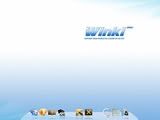 MSI has announced it’s own instant-on operating system called Winki, based on the Linux kernel. Whilst MSI has only talked about Winki in terms of desktop computers, we would be very surprised if Winki did not appear in some of its upcoming Wind netbooks. Both Acer and Asus are expected to feature the HyperSpace instant-on OS in upcoming netbooks and MSI doesn’t want to be left behind.
Typically, these instant-on OSes take a few seconds to boot, but the start up time is still up to 40% shorter than that using a Windows XP-based machine. However, MSI feels it is onto a winner, “Winki’s greatest ability is how it compares to other OS supported devices: it starts up faster, uses less electricity, will not have problems caused by virus and, best of all, and does not cost customers a penny more”, said MSI in a staement. Winki will come with Firefox, Skype and a multi-IM application called Pidgin pre-installed. It also supports 15 different languages. The Winki is likely to debut in a netbook that will be focused largely on web browsing, photo sharing and VoIP calls. No release date has yet been announced. The full press release is available after the jump.
Asus considering Snapdragon for future Eee PCs
March 5, 2009 at 2:58 pm
 Asus has confirmed that it is evaluating the use of the Qualcomm Snapdragon platform for future Eee PCs, according to Samson Hu, general manager of Eee PC business at Asustek. Whilst it has no current mass production plans for non-Intel Atom based Eee PCs, it highlights how competitive the semiconductor space is becoming. The Qualcomm Snapdragon platform targets mobile Internet devices category that Intel is going after. Such devices allow for higher speed communication, high performance multimedia, full Internet browsing along with the use of other productivity applications. Toshiba’s upcoming TG01 is one such device that uses Snapdragon platform from QualComm.
Hu also expects netbook pricing to come down by the second half of the year due to competition. The average selling price of a 10-inch netbook is currently between $299 – $399, but Hu expects this to come down below $299 by the end of the year. In terms of market share, he expects Eee PCs to account for 15% of global netbook shipments to the telecom market in 2009, while touchscreen Eee PCs (like the T91 and T101) will account for 10 percent of the company’s total Eee PC shipments this year.
Via Digitimes.
Windows is OS of choice for netbooks, Linux losing share
March 4, 2009 at 6:13 pm
The latest data from researchers NPD Group has revealed that during the months between November to January, Windows shipped on 90% of all netbooks sold in the US with the remainder belonging to Linux. This shows that Linux has become a less popular choice with manufacturers which did hold a much higher share of 30% last year.
When netbooks were first conceived, Linux was initially regarded as the obvious choice given the low processing overhead and the fact that it was free. However, now that technology is moving ever-faster and consumers demand more, the use of Windows XP is becoming ubiquitous. At the start of February 2009, Brad Brooks, Microsoft’s corporate vice president for Windows Consumer Product Marketing, indicated that the company had spectacular Windows growth on small-notebook PCs. It is unlikely that this trend will reverse and a different way of looking at it is that a 10% Linux share is not a bad position to be in for an open platform.
Via Softpedia.

Recent Comments