


Microsoft making just $15 per netbook XP license
April 20, 2009 at 4:07 pm
 The two main operating systems that you will find on netbooks at this present time are either Linux or Windows XP. The majority of netbooks tend to have XP preinstalled, but in retail generally, there is a lack of options allowing you to choose exactly which operating system suits you. Some consumers would rather save money by choosing Linux and often it is very difficult to work back how much Microsoft is charging for each XP license. However a Wall Street Journal report indicates that this amount is just $15.
This has been a deliberate strategy by Microsoft to gain market share in a segment where it had just a 10 percent foothold when netbooks first started to emerge back in 2007. Fast forward to present time and this has swung Microsoft’s way, with approximately three out of four netbooks sold with XP last year.
But why would Microsoft be willing to take such a hit, especially compared to the $50-$60 it receives for bundling Vista in laptops? My thoughts are that it sees XP as a stop-gap to Windows 7 Starter Edition. Much has been made of the three application limit in the entry level Windows 7 edition and Microsoft are gambling on whether the consumer will really ‘upgrade’ to more expensive versions at some point down the line. It will be interesting to see how consumers react to this app limit and the launch of Windows 7 could even see a retaliatory Linux comeback.
Windows netbook market share continues to grow
April 5, 2009 at 12:02 pm
 Nearly exactly a month ago, we reported how the Windows operating system dominated netbooks sold in the US. Approximately 90 percent of netbooks sold during November to January ran Windows XP and the remainder Linux. It appears that Windows extended this dominance in February, with 96 percent of netbooks running Windows during February 2009 according to the latest NPD Retail Tracking Service data. Read more
Windows 7 to herald the $200 netbook?
March 31, 2009 at 12:18 pm
 Microsoft is predicting that its entry-level Windows 7 operating system, the Starter Edition, will pave the way for netbooks with a price point of $200 (£140) by Christmas. Microsoft sees the price point low enough that it will all but replace current entry-level Linux-based netbooks, which it says see a “disproportionate amount of returns.” Despite this, Microsoft will still be marketing Home Premium as the default Windows 7 OS for netbooks.
Mark Croft, the Director of OEM Worldwide Marketing said: “We have a couple of the OEMs continuing down a path to be very aggressive on price. It puts the pressure on everyone. We’re anticipating opening price points to reach about $200 at least in the US market this holiday season, and another $50 maybe for Nvidia Ion machines.” Read more
Video: Windows 7 Touch gestures demonstrated
March 25, 2009 at 11:06 pm
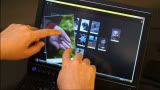 The Windows Touch Team has posted a lengthy post on the ‘Engineering Windows 7’ blog, giving a thorough overview of touch in Windows 7. It is well worth a read for those that are interested in the touch capabilities of Microsoft’s new operating system. From a netbook point of view, Windows 7 could drive a surge in netbook sales although this is likely to depend on whether the hardware is up to scratch as well as mature software. I for one cannot wait for HD multitouch-panels to appear in netbooks/net tablets, but if the software isn’t up to scratch it will be pointless.
“With Windows 7 we have enriched the Windows experience with touch, making touch a first-class way to interact with your PC alongside the mouse and keyboard. We focused on common activities and refined them thoughtfully with touch in mind. You will have the freedom of direct interaction, like being able to reach out and slowly scroll a web page then flick quickly to move through it. With new touch optimized applications from creative software developers you will be able to immerse yourself as you explore you photos, browse the globe, or go after bad guys in your favorite games.”
The team also talk about the core gestures used in Windows 7 (Tap and Double-tap, Flicks, Zoom etc.) We have included a full list & description of these after the break along with a short video demonstrating these gestures in action. Read more
Samsung wants full Win 7 on future netbooks, no Linux plans
March 25, 2009 at 9:41 pm
 Microsoft has openly talked about its hopes for Windows 7 running beautifully on netbooks. It does not want to make the same mistakes it has made with Vista and is keen for netbook vendors to ship with Windows 7 on launch rather than XP. Higher margins is one of the main reasons MS has actively talked about the netbooks + Win 7 combination. Windows 7 Starter (crippled) Edition will only allow three applications to run at one-time and MS are banking on being able to upsell the more premium versions to consumers. Read more
Is Microsoft really planning a Windows 7 netbook SKU?
March 11, 2009 at 5:45 pm
 There has been much talk from Microsoft of Windows 7 “running beautifully on netbooks”. However, what has not been made clear is whether Microsoft is planning to release a netbook-specific SKU or whether it plans to focus OEMs/ODMs to the Windows 7 Starter package and then upsell to more expensive W7 versions. However , recent comments made by Microsoft CEO Steve Ballmer during an analyst meeting last Tuesday indicate that it is still thinking about a specific netbook edition. Read more
Google pushing Android netbooks, sets up team in Taiwan
March 6, 2009 at 11:56 am
 In the clearest indication yet in how serious Google is pushing the Android platform, Digitimes is reporting that Google has set up an Android technology team in Taiwan. The purpose of the team is to offer technical support to Taiwanese hardware manufacturers in developing for the Android platform. According to the president of Google Taiwan, Chien Lee-feng, this includes development for netbooks and embedded systems. Given that both Acer and Asus are based in Taiwan, two of the biggest netbook manufacturers, in our view an Android-powered netbook is a matter of time.
This news is timely given how yesterday we reported that Asus is considering using Qualcomm Snapdragon chipsets in upcoming Eee PCs. However, one of the limitations of using Snapdragon is being unable to use Windows on a Qualcomm chip, thereby having to rely on either Linux or Android. Qualcomm and other vendors are using ARM-based processors to try to take share in a market in which Intel’s Atom dominates. According to research from IDC (International Data Corp) ARM-based netbooks with processors from Qualcomm, Freescale, Texas Instruments and others will ship this year but command no more than 10-20 percent of the market for the next few years.
According to Luis Pineda, senior vice president of marketing for Qualcomm’s CDMA Technologies group, Snapdragon offers a compelling solution over Intel’s Atom. “A netbook is no good if you can’t connect to the Internet and have to look for a WiFi hotspot,” Pineda said. He believes that Snapdragon will define the netbook category by enabling devices that are always connected to a 3G network, similar to mobile phones. He also cites Snapdragon’s power efficiency, which eliminates the need for heat sinks and internal fans in a netbook.
While the majority of consumers are likely to choose Windows-based netbooks, having an always connected experience may become more relevant going forward. With Google willing to set up in the back-yard of some of the biggest netbook manufactures highlights how seriously it plans to tap this market. Over the longer-term horizon, the software barrier within Android is likely to be less of an issue for the consumer.
MS says Windows 7 will “run beautifully on netbooks”
March 5, 2009 at 5:36 pm
 Following the explosive growth of netbooks last year, Microsoft is doing all it can to push Windows 7 as the netbook platform on launch. Microsoft was caught out last year when Vista turned out to be too complex to run on most netbooks and had to resort to selling the lower-margin Windows XP instead. Bill Veghte, Microsoft’s senior vice president for Windows, said that “Windows 7 will run beautifully on netbooks,” when asked the question by Computing.
Microsoft customising Office for netbooks
March 5, 2009 at 1:44 pm
 In a sign, which shows how serious Microsoft is taking the netbook segment, Microsoft is looking at ways to customise its Office suite to cater for netbook users. Stephen Elop, president of Microsoft’s business division said, “There are new ways to package and monetize SKUs that are unique to the netbook market. From the Office perspective if someone is spending just a few hundred dollars on a netbook, how much will they spend on productivity software?”
Given the free alternatives out there, including the excellent Openoffice.org, it seems that MS are asking the right questions. As we reported yesterday, Windows is now shipping on approximately 90% of all netbooks sold (well in the US anyway) and MS will need to price its specific SKU’s carefully distinguishing the desktop market versus netbook-specific SKUs.
Via Network World.
Windows is OS of choice for netbooks, Linux losing share
March 4, 2009 at 6:13 pm
The latest data from researchers NPD Group has revealed that during the months between November to January, Windows shipped on 90% of all netbooks sold in the US with the remainder belonging to Linux. This shows that Linux has become a less popular choice with manufacturers which did hold a much higher share of 30% last year.
When netbooks were first conceived, Linux was initially regarded as the obvious choice given the low processing overhead and the fact that it was free. However, now that technology is moving ever-faster and consumers demand more, the use of Windows XP is becoming ubiquitous. At the start of February 2009, Brad Brooks, Microsoft’s corporate vice president for Windows Consumer Product Marketing, indicated that the company had spectacular Windows growth on small-notebook PCs. It is unlikely that this trend will reverse and a different way of looking at it is that a 10% Linux share is not a bad position to be in for an open platform.
Via Softpedia.

Recent Comments