


MSI Wind U115 Hybrid runs for over 13 hours on single charge
March 12, 2009 at 12:10 pm
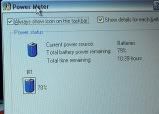 The MSI Wind U115 netbook was announced at CES in January with a promised battery life of 10.5 hours on a 9-cell 5200mAh battery. This long battery life was touted as a result of a combination of a 160GB hard drive and a 8GB SSD. The U115 is powered by a 1.6 GHz Intel Atom Z530 CPU. However, according to some battery tests by EeePC.de, it seems that those MSI battery claims may actually be conservative.
The test was run in Battery Eater Classic, which continuously calculates the decimals of Pi until the CPU is at 100-percent, as well as running 3D graphics tests. As for netbook settings, the U115 was switched to 30-percent brightness, using SSD only (rather than the HDD) and WiFi turned off. This yielded a battery life of 13 hours and 15 minutes. More tests are planned, this time testing how long it would last with WLAN turned on, which would provide more real-world results. However, given the impressive 13-hour run time, we would expect at least ten hours with WiFi switched on.
Now, from reading the article, it is still unclear whether a 9-cell or 6-cell battery was used in the test. I imagine it is indeed the 9-cell battery, although it is worth remembering that this is unlikely to be sold as standard with the Wind U115 Hybrid. However, if these results are representative of final units then even a 6-cell battery is likely to yield a battery life of over 7 hours in the real world.
Asus considering Eee PC and notebook merger
March 12, 2009 at 11:17 am
 Asustek is thinking of merging its Eee PC and notebook departments enabling it to both cut costs and increase efficiency according to Digitimes. Market sources claim that Asus has already sent documents of the merger plan including likely synergies and staff cuts to its workforce. Asus’ president has declined to comment on these claims.
The plans are still far from finalized. An unnamed source is quoted as saying that the number of departments could be halved, from six to three, and that 5 to 10 percent of the workforce could be laid off. This would be the company’s second reorganization this year. Back in January Asustek halved its number of departments in an effort to streamline its operation.
This would be a change of direction for Asus which split out the Eee PC brand after strong netbook sales. It is likely that the harsh economic conditions has meant that Asus has had to reassess their bottom line and cut ‘duplicate’ costs where possible. Asus would be following Acer if the reorganisation goes ahead, which already keeps its netbooks within the overall laptop segment.
In our view, whilst Asus is at the reorganisation, it should also take a look at the branding of its Eee PCs which consumers must find very confusing. For example when faced with the following – Eee PC 1000, 1000HA, 1000H, 1000HE, 1002HA – how are consumers meant to tell the difference. Given that the Eee brand has now entered the nettop segment too, it muddies the waters even further.
AMD CEO believes netbook name “will go away over time”
March 11, 2009 at 7:34 pm
 In an interview with Businessweek, AMD CEO Dirk Meyer has outlined his thoughts on netbooks and the company’s plans in this space. AMD is currently opening a development track aimed at lower-cost and lower-power consumption machines. However, when asked about the netbook name, he said that “I think the netbook name will go away over time”.
When pressed on this he replied, “Well, what’s a netbook? It’s a small notebook. But how small? Where’s the cutoff point between a notebook and a netbook? I think the line will continue to blur and people will just think of them both as computers.”
When asked why AMD has been so slow to embrace this segment, he replied, “Knowing that this trend toward lower power consumption and more mobility is going to happen, we just decided to load that into the R&D pipeline for later. It’s not a big volume target and not a big dollar opportunity.…”
“One of the saddest things about the PC industry right now is, since late last year, all anyone seems to want to ask about is netbooks. Good grief! It’s a low-cost limited-function device. There’s not much excitement or money in dollar volume there.” In our eyes it sounds he is a bit upset that AMD hasn’t been as active in one the few growing segments in computer hardware.
Toshiba To Enter US Netbook Market Later This Year
March 11, 2009 at 6:59 pm
 Whilst Toshiba already sells the NB100 netbook in Europe and Latin America, it has yet to enter the US market. This may be about to change however, according to a Toshiba representative at Tuesday’s XChange Solution Provider ‘09 conference.
Toshiba is looking to enter the US netbook market with a model with as-yet unknown specifications. The manufacturer is looking to enter around the middle of the market’s range. “You know us: We won’t be the least expensive out there and we won’t be the most expensive,” said Patrick Mani of Toshiba.
Toshiba’s existing netbook, the NB100, is based on a 1.6Ghz Intel Atom processor, offers an 8.9-inch (1024 x 600) screen and is available with either Windows XP Home Edition or Ubuntu Linux. It also comes with 1GB of RAM, a 120Gb hard drive, a 0.3 MP camera and a 3.5 hour battery. No release date has been announced.
Via ChannelWeb.
Intel GN40 to support 1080p but not Blu-ray
March 11, 2009 at 6:25 pm
 Intel has clarified that its upcoming GN40 chipset will support “typical broadband internet content” in 1080p HD – but not Blu-ray playback according to Fudzilla. An official statement from the company slightly clarifies the positioning of the chipset: “GN40 is designed to do 1080p HD playback for typical broadband internet content; it is not designed to enable full Blu-ray capability where the bitrates and demands of multi-layer content are significantly higher than that of internet HD content.” This comes despite claims from Intel that it would be offering “full Hi-Def video decode with HW acceleration with the off-roadmap Mobile Intel GN40 Express Chipset.”
While the GN40 was always going to handle the relatively lightweight 720p HD format, no-one was quite sure whether full-HD 1080p would be on the cards. In our view, the lack of 1080p playback is not too much of a big deal. After all can anyone really tell the difference between 720p and 1080p on a 10-inch screen? This is even more apparent given that no netbooks released so far have a resolution close to 1920 x 1080. In our eyes, this would only be of use to a HDMI-equipped netbook which would allow the connection to an external display. For some this news may come as a disappointment and gives Nvidia’s Ion platform a chance to steal the limelight.
Is Microsoft really planning a Windows 7 netbook SKU?
March 11, 2009 at 5:45 pm
 There has been much talk from Microsoft of Windows 7 “running beautifully on netbooks”. However, what has not been made clear is whether Microsoft is planning to release a netbook-specific SKU or whether it plans to focus OEMs/ODMs to the Windows 7 Starter package and then upsell to more expensive W7 versions. However , recent comments made by Microsoft CEO Steve Ballmer during an analyst meeting last Tuesday indicate that it is still thinking about a specific netbook edition. Read more
Android Eee PC prototype due in two months
March 11, 2009 at 5:08 pm
.jpg) An Android-powered Asus Eee PC was originally muted for release by the end of this year. However, it seems that a commercial release may happen much sooner. Eric Chen, head of Asus Europe, announced at CeBIT last week that its engineers will be ready to present a working Android-powered Eee PC much sooner than expected.
An Android-powered Asus Eee PC was originally muted for release by the end of this year. However, it seems that a commercial release may happen much sooner. Eric Chen, head of Asus Europe, announced at CeBIT last week that its engineers will be ready to present a working Android-powered Eee PC much sooner than expected.
Asus engineers have been experimenting with how to adapt the Android OS, which is currently optimised for touchscreen smartphones, to a much larger netbook display. Asus will formally present the results of this experiment in a couple of month’s time according to Mobinaute. Specifications for such a netbook are unknown, although the news corroborates last week’s story that Asus is considering using Qualcomm Snapdragon chips in upcoming Eee models. Watch this space for further news.
Lenovo launching a Vaio P clone?
March 11, 2009 at 4:28 pm
 Lenovo is preparing to launch a rival to Sony’s Vaio P if these latest spy shots are to be believed. Chinese Engadget obtained some slightly fuzzy pictures showing the device which has more than a resemblance to Sony’s beauty. The model seems to have a slightly smaller screen size than the Vaio P and appears to have what looks like a leather casing (much like the Thinkpad Reserve Edition). The ThinkPad Reserve was produced as a limited-run notebook for executives that came with special support above and beyond Lenovo’s usual warranty.
As with the Vaio P, there is only a trackpoint for control. The pictures also seem to show what is a small camera and other buttons on the side of the display. Specifications are unknown however a Windows key can be seen on the keyboard. It is unclear whether this is a concept or something due for mass production. “Our design labs in Beijing are constantly researching new innovations in design and functionality. Many of these will never reach commercial production. This concept is another demonstration of Lenovo seeking new innovative products to better address customer needs,” said a Lenovo rep.
Latest Apple rumour – OLED netbook with flash drive
March 11, 2009 at 3:42 pm
Rumours surrounding a possible move by Apple to enter the netbook segment have been at fever pitch this week. This is our third Apple rumour post in as many days and this time the latest on the grapevine is that according to inside sources at Smarthouse, discussions between Apple and Sony are taking place to license its OLED screen technology. The sources suggest that the plan is to release a 10-inch OLED netbook for Christmas 2009. The same sources suggest that this OLED screen will be paired with a SDX flash memory storage drive.
Now if any of this is true, you can safely say that this will carry a ridiculous price tag. There’s no doubt in my mind that this will be more expensive than the Sony Vaio P and is likely to enter four digits. This certainly would fit with Apple’s mantra that it doesn’t “know how to make a $500 computer that’s not a piece of junk”. It also means that, if true, the margins for such a product may not be as thin as everyone had been thinking. Apple is looking to release a premium product and if these rumours are to be believed, then there’s no doubt many people will lap it up, despite the cost premium.
Why are 1.86GHz-Atom powered netbooks so scarce?
March 10, 2009 at 9:05 pm
 It would be fair to say that the majority of netbooks on the market today are powered by a 1.6GHz Intel Atom CPU. To a certain degree this leads to similar performance across a number of netbooks with differentiation coming from HDD, RAM as well as design.
We have wondered why we do not see more 1.86GHz Atom CPUs being using by manufacturers. Obvously, we knew that this is likely to be due to price. However, what we did not know is that a 1.86GHz actually costs three times that of a 1.6GHz equivalent! Currently the Intel Atom N270 (1.6GHz) sells for $44 and is one of the more popular CPUs among netbook manufacturers. However the Intel Atom Z540 (1.86GHz) sells for a staggering $135. As can be seen from this Intel price sheet, this gives OEMs/ODMs less incentive to use the more powerful CPU. Especially given that netbooks are meant to provide good value for money.
VIA invites 200 partners to define netbook future
March 10, 2009 at 7:43 pm
 Via Technologies, the x86 microprocessor developer, has announced the Global Mobility Bazaar (GMB) Tech Forum Spring, an event to discuss the future of netbooks. Over 200 partners are expected to attend, including PC manufacturing and infrastructure partners, from American Megatrends (AMI) to SanDisk.
“With the already strong momentum around mini-notebooks increasing, the Via GMB Alliance has attracted interest from both established players and new companies wishing to enter the market. This is not only a validation of Via’s vision and strategy for the segment, but an acknowledgment of the tremendous business opportunity that exists around these popular devices.”
The event will have live demonstrations of the latest netbook technologies, as well as a number of presentations looking at netbook trends in this rapidly expanding market segment. The Tech Forum Spring will be held on March 17th 2009 in Shenzen, China.
Some of the topics being covered:
Overall, it should be an interesting event and we’ll be keeping our ear to the ground if anything new comes from it.
ARM to take 55 percent netbook market share by 2012
March 10, 2009 at 6:31 pm
 Whilst Intel’s Atom is expected to hold a commanding 80 percent netbook market share in 2009, ARM is expected to turn this around in the next three years by taking a 55 percent netbook market share by 2012 according to The Information Network. “ARM processors, not Intel’s Atom, will benefit from the current technology-economic cycle. Anyone thinking that ARM will make up only a small percentage of netbooks gong forward is not thinking outside the box,” Dr. Robert Castellano noted, President of The Information Network. Read more
Slimline Acer Aspire One ZG8 (AO530) appears in FCC
March 10, 2009 at 4:55 pm
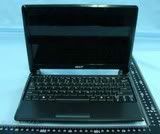 A slimline version of the Acer Aspire One dubbed the ZG8 (model name AO530) has passed through the FCC. The unit will be approximately just one-inch thick (25.5 x 18.5 x 2.4 cm). This revised Acer Aspire One has a new type of hinge which the Ethernet and VGA ports are repositioned onto it.
No other specifications have been revealed apart from the fact that it will support 3G. The model name ‘AO530’ may also suggest the use of an Intel Atom Z530 under the hood. Earlier reports suggested 1GB of RAM and a 160GB hard-drive. There is no official word from Acer so far, although details are likely to be forthcoming.
Via Netbook3G.
Acer Aspire One mod – adding an eSATA port
March 10, 2009 at 3:55 pm
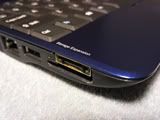 Normally when one is thinking of modding a netbook one thinks of upgrading the RAM or hard-disk drive. However, tnkgrl has gone one step further by modding her Acer Aspire One to add an eSATA port to the side. An eSATA port allows for a speedy external drive capable of 300 Mbps data transfer, nearly five times faster than using the integrated USB 2.0 ports of the AAO.
The guide is the last in a four-step series where she has already added Bluetooth, 3G, more RAM as well as swapping out her hard-drive. Budding enthusiasts beware though, this mod will void your warranty as it involves actually cutting into the casing! However, given the price of a cheap netbook over a laptop/notebook some people might want to take that risk.
Packard Bell ditches DOT netbook
March 10, 2009 at 3:09 pm
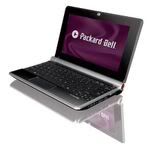 Packard Bell has ditched its DOT netbook just months after it was first announced. The model was announced last September and was due to hit retail in January 2009 at a price-point of £299 although it never arrived. The reasons why the model has been terminated are unknown, however a new model is set to take its place. “The DOT is going end of life and will be replaced by new model,” said a spokesman for Packard Bell.
The DOT netbook was based on the Acer Aspire One, sporting a 1024 x 600 resolution screen and powered by a 1.6GHz Intel Atom N270 CPU and 1GB RAM. It was due to have a 160GB HDD, three USB ports, webcam and optional 3G modem. At this point it is not clear how the specs of the newer model will differ to the DOT. All the spokesman said was that there will be “some changes made to the brand”.
Via Pocket-Lint.

Recent Comments