


Acer lowers netbook shipment forecast, no Android netbook this year
April 29, 2009 at 6:23 pm
 Acer reported its first quarter results today and it didn’t make for pretty reading. The global recession led to profits slumping by almost a third to NT$2.0 billion ($60 million). Acer’s popular netbooks helped to shore the company’s results in the first quarter as consumers reined in spending amid a global recession. “Consumers are so picky, they don’t want to spend one dollar more than they really need,” says Acer chairman J.T. Wang.
Despite the resilient netbook segment, Acer lowered its netbook shipment forecast for 2009. It now expects to ship 10 million-12 million netbook PCs this year, compared with its previous forecast of 12 million-15 million. JT Wang says that he expects overall global netbook shipments to reach 50 million units in 2010. Read more
Video demo of Skytone’s Alpha 680 Android netbook
April 28, 2009 at 10:28 pm
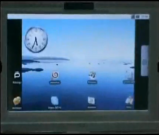 Skytone recently announced the first Android netbook, the Alpha 680, which is expected to be released in the summer for approximately $250. We now have a video hands on of the 7-inch convertible tablet, which shows the Android OS in action.
Obviously, Android is at the early stages in being ported from smartphones to netbooks. This shows in the video, in what is frankly a disappointing demonstration. The applications seems to run relatively smoothly, however each app seems to take the full screen which means only one application can run at once. It seems that the phone OS was just plugged into the larger 7-inch display, as the buttons and icons look huge.
As we discussed recently, ARM chips have limited flash video support right now. Therefore it is not surprising to see Android unable to support Flash. At the $250 price point, the Skytone Alpha 680 will have to do more to entice customers to part with their cash. Check out the videos after the break. Read more
Averatec preparing Android-powered Vaio P clone?
April 28, 2009 at 7:12 pm
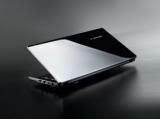 Whilst Averatec are not the most well known brand when it comes to netbooks, this may be set to change with its next model. Averatec is set to launch a new netbook due in August or September which looks like a cross between Sony’s Vaio P and Lenovo’s Pocket Yoga concept and is rumoured to run Google’s Android OS.
US-based Averatec is owned by a Korean company called TriGem. CEO Tae-Hyun “Tiger” Cho claims that this new device has been developed in-house “from scratch”. Whilst the operating system has not been confirmed, Cho said that the “OS is going to be a surprise,” however he also confirmed that it will be “a merger of cell phone and PC technology.” It doesn’t take a genius to work out that Google’s Android is likely to be the front runner (unless Symbian is making moves behind the scene). Read more
Skytone’s Android netbook to cost around $250
April 26, 2009 at 11:39 am
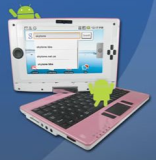 Skytone announced the first Android-powered netbook earlier this week, when the Alpha 680 quietly appeared on the company’s website. Whilst this 7-inch netbook with 800 x 480 resolution screen won’t get too many people excited, especially with its anaemic specifications, its appearance is more symbolic than anything. It is the first known Android netbook and also one of the first ARM-powered netbooks we’ve seen.
More details on this ARM-powered convertible tablet have emerged. The Alpha 680 will cost around the $250 mark when it is released within the next three months. Whilst the Alpha 680 is going through final testing at the moment, final prototypes are expected in June. ARM executives hope that its chips will usher in an era of sub-$200 netbooks. The Alpha 680’s price-point is somewhat higher than that, but Skytone expects pricing to come down as it ramps up production. Read more
Netbook boot times compared: Android vs. Fedora vs. Ubuntu
April 25, 2009 at 11:03 pm
 GeunSik Lim, a Samsung software developer specialising in embedded Linux system design, has compared the netbook boot times for several Linux-based operating systems to see which was fastest. He compared Google’s Android platform against Linux Fedora 10 and the latest version of Ubuntu (Netbook Remix 9.04).
Whilst the video claims to show different netbooks, Lim said that the tests ran on a netbook with a 1.6GHz N270 Atom CPU, Intel graphics and a 160GB (SATA) hard-disk drive. As can be seen from the video below, Google’s Android came out fastest at just 13 seconds, Ubuntu was next while Fedora came some way behind. I certainly can’t wait to see how well they have adapted the Android platform for netbooks, hopefully we’ll see more detailed news on this at Computex in June. Check out the video after the break. Read more
MSI to reveal Android netbook at Computex?
April 23, 2009 at 1:23 pm
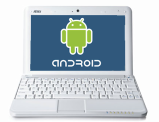 We already know that at least two ARM-powered netbooks are due to make an appearance at Computex Taiwan this year. Given the Android push, we would not be surprised to see these running on Google’s operating system. Now we have word from Digitimes, that MSI is planning to showcase an Android-powered netbook at the same show.
The report says that development of the netbook has been in conjunction with the Taiwan’s Institute for Information Industry (III), although no further comments were given. Either way, Computex looks like it will have some big news for the netbook market. We can’t wait to see what comes out of it. Computex takes place between 2 – 6 June 2009.
Skytone Alpha 680 – World’s first Google Android netbook
April 21, 2009 at 11:26 am
Almost from nowhere, the world’s first Google Android netbook has appeared from a Chinese manufacturer, Guangzhou Skytone Transmission Technologies, more renown for producing low cost netbooks targeted to kids. On Skytone’s website, you can clearly see the Alpha 680 which is meant to be a refresh of the Linux-based Alpha 600.
The Alpha 680 has a 7-inch screen with 800 x 480 resolution and is powered by an ARM 11 533MHz processor. Given its believed trade price point at $100, the rest of the specifications are very weak. The Alpha 680 comes with only 128MB RAM and 1GB of flash storage as standard. An optional upgrade to 256MB RAM and 4GB flash storage is possible. For those that want more, a SDHC slot is also supported. Read more
Linux to outnumber Windows on netbooks by 2012
April 14, 2009 at 4:24 pm
 Whilst Windows may currently dominate market share in the netbook segment, it wasn’t always that way. In the second half of 2007, Windows had a market share of around 10 percent growing significantly in 2008 to 75 percent. However, according to ABI Research, the pendulum will swing back the other way by 2012, with Linux netbooks expected to outnumber those running Windows.
ABI Research principal analyst Philip Solis says, “ABI Research believes that 2012 will see the tipping-point at which netbooks running Linux-based and mobile operating systems outnumber those running Windows XP. Device vendors, chip-makers and mobile operators can take some comfort from the fact that this trend should help expand the market even in a down economy.” Read more
Acer trialling Android on netbooks
April 8, 2009 at 5:39 pm
 At Acer’s New York press conference last night, CEO Gianfranco Lanci and product guy Jim Wong confirmed that they are testing Android on its netbooks. Wong confirmed that the Android prototype has a “good chance” of becoming a commercial reality. However, Acer also said that it does not feel that Android is ready for the limelight just yet. Trying to get the full internet experience just right is the biggest obstacle the OS faces in their view.
Wong also confirmed that pretty much every major netbook manufacturer is testing Android on netbooks right now. From what we know, Asus and HP have talked about it. I would guess that we may be in for some exciting Android netbook launches by the end of the year.
“Android in my opinion is for communications,” said CEO Gianfranco Lanci. “And Windows comes at the market from the computing side. An ideal solution would offer both. So right now we are using Android for our smartphone, and we are testing it on our Netbooks. But I think everybody in the industry is testing Android on Netbooks.”
ODM Compal developing Android netbooks
April 6, 2009 at 5:52 pm
 Taiwanese Original Design Manufacturer (ODM), Compal Communications, is developing netbooks based on the Android operating system reports Digitimes. The report highlights that Compal is currently in negotiations to cooperate with several netbook vendors on the Android netbook. Compal were tipped to take over manufacturing of the Acer Aspire One and are believed to be the ODM for the Dell range of Inspiron Mini netbooks.
Google recently set up an Android team in Taiwan to tailor its smartphone based operating system to netbooks. Details on the netbook are thin, however the use of an ARM-based CPU is a strong possibility. This could be via a basic ARM CPU or a HD-capable Qualcomm Snapdragon device complete with 1080p support and high-speed WWAN connectivity.
HP trialling Google Android for future netbooks
March 31, 2009 at 10:09 pm
 HP is trialling the use of the Google Android operating system on some of its netbooks according to a WSJ report. It suggests that HP has been running tests using Google Android for evaluation purposes, but is undecided as to whether it will bring an Android netbook to the market. This confirmation apparently comes from Satjiv Chahil, a vice president of HP’s PC division.
Details are scarce, but the obvious reasons to switch to Android would be lower price and higher performance. Switching to Android could eliminate most or all of the OS license cost for each netbook. Android, based around a Linux kernel, is written in Java and was originally designed for smartphones. So far, only HTC has released an Android-based smart phone, but Motorola has models on the way, and Dell is said to be considering one.
We have already heard rumours that Asus is considering Android for upcoming netbooks, possibly with a Qualcomm Snapdragon chip? A move by HP to adopt Android may also see it adopt an ARM-based processor. Earlier this month, we heard how Google was pushing Android netbooks by setting up a team in Taiwan, home to some of the biggest netbook vendors like Acer and Asus.
Android to be saviour of the Linux netbook
March 17, 2009 at 2:43 pm
 Google’s Android will be the saviour of the Linux netbook, and we’ll start to see small, cheap computers based on the phone-oriented operating system later this year according to Ovum. After a strong start, Linux-based netbooks are now outsold by those with Windows XP. Some estimates suggest that Windows recent dominance gives it a 90-pecent market share. Ovum suggests that netbook buyers seeking a small and/or cheap laptop will generally opt for Windows machines – presumably for the familiarity and software compatibility it brings.
Linux’s opportunity is for the netbook to be seen as an always-on internet device, helped by ARM’s infrastructure. Some of the larger Linux distro’s have not looked to develop a specific Linux version for netbooks. Just today, Novell said that it will not be producing a version of SUSE Linux for ARM-based Netbooks. Ovum suggests that Android, which has a Linux foundation but a more tightly controlled user environment on top, will allow netbook makers to better define them as internet appliances.
Ovum said it expects “back-to-basics” netbooks to appear later this year at the $200 (£142/€154) mark – half the price of the majority of today’s netbooks. They particularly want to increase battery life and deliver fast start-up times, which may also favour ARM/Android designs.
Android Eee PC prototype due in two months
March 11, 2009 at 5:08 pm
.jpg) An Android-powered Asus Eee PC was originally muted for release by the end of this year. However, it seems that a commercial release may happen much sooner. Eric Chen, head of Asus Europe, announced at CeBIT last week that its engineers will be ready to present a working Android-powered Eee PC much sooner than expected.
An Android-powered Asus Eee PC was originally muted for release by the end of this year. However, it seems that a commercial release may happen much sooner. Eric Chen, head of Asus Europe, announced at CeBIT last week that its engineers will be ready to present a working Android-powered Eee PC much sooner than expected.
Asus engineers have been experimenting with how to adapt the Android OS, which is currently optimised for touchscreen smartphones, to a much larger netbook display. Asus will formally present the results of this experiment in a couple of month’s time according to Mobinaute. Specifications for such a netbook are unknown, although the news corroborates last week’s story that Asus is considering using Qualcomm Snapdragon chips in upcoming Eee models. Watch this space for further news.
Ten ARM-powered netbook models expected in 2009
March 9, 2009 at 5:54 pm
 Arm’s Chief Executive, Warren East, expects that at least ten ARM-based netbooks with processors from Qualcomm, Freescale and Texas Instruments will hit retail shelves this year. We already know that Asus is considering Qualcomm chips (based on ARM designs) for upcoming Eee PCs.
East is frustrated on the lack of Microsoft support for upcoming ARM-powered netbooks. It is widely understood that Windows XP, Vista and the upcoming Windows 7 cannot run on ARM CPUs given their need for x86 processors. Linux or Google’s Android are the most likely operating systems for ARM-based netbooks. However, Windows Mobile and Windows CE are used in close to 150 different mobile phones powered by ARM chips. Presumably little adaptation would be needed for netbook usage.
Google pushing Android netbooks, sets up team in Taiwan
March 6, 2009 at 11:56 am
In the clearest indication yet in how serious Google is pushing the Android platform, Digitimes is reporting that Google has set up an Android technology team in Taiwan. The purpose of the team is to offer technical support to Taiwanese hardware manufacturers in developing for the Android platform. According to the president of Google Taiwan, Chien Lee-feng, this includes development for netbooks and embedded systems. Given that both Acer and Asus are based in Taiwan, two of the biggest netbook manufacturers, in our view an Android-powered netbook is a matter of time.
This news is timely given how yesterday we reported that Asus is considering using Qualcomm Snapdragon chipsets in upcoming Eee PCs. However, one of the limitations of using Snapdragon is being unable to use Windows on a Qualcomm chip, thereby having to rely on either Linux or Android. Qualcomm and other vendors are using ARM-based processors to try to take share in a market in which Intel’s Atom dominates. According to research from IDC (International Data Corp) ARM-based netbooks with processors from Qualcomm, Freescale, Texas Instruments and others will ship this year but command no more than 10-20 percent of the market for the next few years.
According to Luis Pineda, senior vice president of marketing for Qualcomm’s CDMA Technologies group, Snapdragon offers a compelling solution over Intel’s Atom. “A netbook is no good if you can’t connect to the Internet and have to look for a WiFi hotspot,” Pineda said. He believes that Snapdragon will define the netbook category by enabling devices that are always connected to a 3G network, similar to mobile phones. He also cites Snapdragon’s power efficiency, which eliminates the need for heat sinks and internal fans in a netbook.
While the majority of consumers are likely to choose Windows-based netbooks, having an always connected experience may become more relevant going forward. With Google willing to set up in the back-yard of some of the biggest netbook manufactures highlights how seriously it plans to tap this market. Over the longer-term horizon, the software barrier within Android is likely to be less of an issue for the consumer.

Recent Comments