


Banshee media player to get special netbook UI
July 16, 2009 at 11:20 pm
 Banshee, which was originally developed as an audio player for Linux, is to get a custom user interface designed for netbooks in the next major update. Banshee has moved on to become a fully featured multimedia player, able to play video and supporting compatibility with devices such as the T-Mobile G1. Banshee v2.0 will also see the player deliver photo management.
Banshee is planning for a new custom interface for netbooks dubbed Cubano in future versions. Ars Technica has a screenshot of this UI and it does look quite simple and user-friendly. It has a look reminiscent of Moblin with its lack of menus and cover art grid view. Read more
Dell interested in Chrome OS and Moblin for future netbooks
July 16, 2009 at 4:00 pm
 Dell is one of the few manufacturers that has embraced Linux on its ‘Mini’ range of netbooks. Its Mini 9 and Mini 10 devices had options with Ubuntu as well as Windows. The good news is that Dell looks like it is considering other Linux options for future netbooks too. Dell’s Doug Anson has said that the company is “very interested” in Moblin and is currently evaluating Chrome OS.
He sees all of these different Linux-based operating systems leading to a “renaissance within the PC and small device industry”. Anson went on to say, “these alternative operating environments are truly “different” from the traditional Windows platform – they don’t attempt to simply “mimic” Windows”.
Dell is working closely with key partners (Canonical and Intel) in developing potential offerings for Moblin, which it sees as “the next evolutionary step of the traditional Linux environment”. Whilst anything tangible may be some time away, it is encouraging that Dell is encouraging the use of these alternative operating systems. Hopefully, Jolicloud will also be on that list soon too.
Moblin to be integrated with instant-on HyperSpace technology
July 14, 2009 at 3:57 pm
 Moblin, the Linux-based netbook operating system, has partnered with Phoenix Technologies to incorporate its instant-on OS, HyperSpace, into the Moblin platform. Moblin, which is pushed heavily by Intel and is targeted to netbooks with Intel Atom processors, has had a good reception since it launched its v2.0 Beta a while back.
The announcement mainly relates to the promotion of this partnership to original equipment manufacturers (OEMs) and original design manufacturers (ODMs). This tag-team will mean that Moblin will take advantage of HyperSpace’s instant-on OS, which means netbook users can access the web and other applications just one-second after turning on the device.
These other applications include HyperSpace Office, which is Microsoft compatible, Google Picasa and Adobe Photoshop. The dedicated netbook operating system segment is becoming a competitive playing field, what with Jolicloud and Ubuntu Netbook Remix already creating waves, not forgetting the juggernaut that is Google with its Chrome OS coming next year. This competition can only benefit consumers and provide some interesting innovations in the netbook space.
Via Laptop Mag.
Google Chrome OS coming to netbooks in 2010
July 8, 2009 at 11:53 am
 The speculation surrounding a Google operating system has existed for many years. Finally, the rumours are no more, Google has officially announced the Google Chrome Operating System. As you can probably tell by the name, the OS is a natural extension of the Chrome browser. It is an “open source, lightweight” OS that will initially be targeted to netbooks for release in the second half of 2010.
Google says that the key attributes of the Chrome OS are “speed, simplicity and security”. The OS is based on Google Chrome running within a new windowing system on top of a Linux kernel. This means that much of the user experience takes place on the web (or cloud computing if you like). The Google Chrome OS will run on both x86 and ARM chips, so there should be no limitations on whether we see this OS on netbooks or smartbooks. Read more
Always Innovating Touch Book video demonstration
July 3, 2009 at 9:12 am
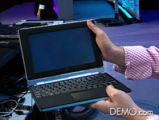 Always Innovating’s Touch Book device is due to start shipping to customers this month. Up until now, we have not been privy to any videos of the device in action. A video has now emerged that’s a few months old, from a conference called Demo. However, it does a good job of showing exactly what the Touch Book is and why it’s different to your average netbook.
The Touch Book is one of the first devices that is effectively a tablet with dockable keyboard. This means it can be used in a traditional netbook form-factor as well as a tablet. It is based on an ARM processor (TI OMAP3530 CPU) and is therefore a fanless system with a battery life of between 10-15 hours. Read more
New Archos 10 SKU includes Ubuntu, 2GB RAM and 500GB HDD
June 29, 2009 at 12:03 pm
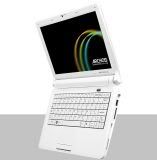 Archos is releasing a version of its 10-inch netbook, the Archos 10 Ubuntu Edition, which will include Ubuntu 9.04, 2GB RAM, a 500GB HDD and a 6-cell battery for €375 in France. So far this has only been announced for the Archos 10 rather than the recently announced Archos 10s, which is much slimmer than the original, but includes the same specifications.
This is only slightly more expensive than the standard Windows XP SKU that costs €349 and comes with 1GB RAM and a 160GB HDD. So far there is no idea if this SKU will be sold outside of France or, if indeed there will be an Archos 10s Ubuntu edition. We’ll report back on further developments.
Via ArchosFans [via NetbookNews.de].
Jolicloud OS adds latest apps including MobileMe
June 25, 2009 at 9:35 pm
 Jolicloud has added a whole host of new applications to its netbook-targeted operating system. This includes MobileMe, the popular Apple service that allows you to sync your iPhone, Mac and PC as well as pushing new emails and calendar events. To show that Jolicloud is staying contemporary, it also now supports Almost.at, which allows you to follow events in real time.
In recent weeks, Jolicloud has also added access to Google Chrome, Picasa, Vimeo and OpenOffice Impress. Many more applications are promised over the coming weeks. For those that are interested in testing out the Private Alpha ‘Robby’ release, then you’ll be pleased to hear that Jolicloud is about to send out a new batch of invitations shortly. You can register for an invitation here.
Via Portable Monkey.
Always Innovating’s Touch Book shipping in July
June 25, 2009 at 5:51 pm
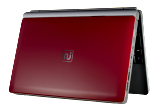 Always Innovating’s unique Touch Book tablet has moved beyond the concept stage and has finally entered production. The 8.9-inch tablet has a sliding keyboard dock so that it can be used in a more traditional netbook form-factor. The company has also shown off photos of the very first unit.
The Touch Book is powered by a Texas Instruments OMAP3530 processor, 512MB RAM and 8GB flash storage. It also includes Wi-Fi (b/g/n), Bluetooth and two external USB ports. As it is using a power efficient ARM processor, battery life is expected to last 10-15 hours.
The first shipment is expected to arrive in July 2009. Pre-orders for the Touch Book tablet cost $299, if you want the keyboard docking device then that will set you back another $100. For those in the UK and Europe that are interested in the device, Always Innovating is now accepting international orders following huge demand. However, just so that you’re aware, you’ll be stuck with a US keyboard and US plug.
Via Engadget.
Sugar on a Stick v1 Strawberry OLPC OS available to download
June 24, 2009 at 6:12 pm
 The Sugar operating system was originally developed for the One Laptop Per Child (OLPC) project and was first found on the XO-1 netbook. The operating system was created to engage young children with a simple user interface and to help develop their IT skills.
Sugar Labs has now announced that this operating system is now available to download straight to your netbook, whether it runs Windows, Linux or even a Hackintosh Mac. They’ve called this download ‘Sugar on a Stick v1 Strawberry’ and full instructions on how to download this on a 1GB USB flash drive can be found here.
“Sugar is preferred because it is a superior learning experience for young children: engaging while being affordable,” said Walter Bender, founder and executive director. “Sugar on a Stick is a great way to try Sugar without touching your computer’s hard disk. It is also well suited to slower, older PCs and low-powered netbooks.”
Via Tech Radar.
Intel partners with Nokia to create new class of ‘always-on’ mobile gadgets
June 23, 2009 at 5:22 pm
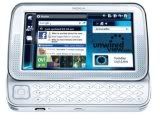 Following intense rumours and speculation this morning, Intel has now officially announced that it is to partner with Nokia to “define a new mobile platform beyond today’s smartphones, notebooks and netbooks”. Exactly what kind of gadgets these will be remains a mystery, although it may just be both companies trying to push the Mobile Internet Device (MID) segment which hasn’t taken off as Intel hoped.
Intel talks of these devices having “ubiquitous Internet connectivity” in a “pocketable form factor”. All of this sounds incredibly similar to the smartbook devices being pushed by ARM-based companies such as Qualcomm and Freescale. It even talks of low power computing. Read more
Corel and ThinkFree launch netbook Office Suites
June 18, 2009 at 8:33 pm
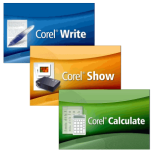 Two companies have announced Office Suites that have been tailored for netbooks. Corel has launched its Home Office Suite targeted for netbooks, which includes three applications to handle word-processing, spreadsheets and presentations. These apps have full support of Microsoft Office and can also export PDFs. The suite is available for download or on a USB stick from Corel and costs $69.99
In terms of technical requirements, you’ll need to have Windows XP (or Vista) installed and also, bizarrely, a screen resolution of 1024 x 768. This is strange considering most netbooks have a resolution of 1024 x 600. Read more
Nvidia: Windows CE performs better than Android on smartbooks
June 18, 2009 at 4:32 pm
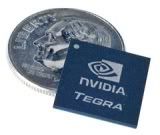 Google’s Android operating system has been getting all of the column inches and hype relating to an eventual transition to netbooks and smartbooks. However, Nvidia feels that Windows CE is the more mature platform, as things stand, for Tegra-based smartbooks.
The Tegra platform is different to ION in that it pairs an ARM-based processor with an Nvidia GeForce GPU (ION pairs an Intel Atom CPU with the Nvidia 9400M graphics). Nvidia certainly has high hopes for the Tegra platform, with its CEO Jen-Hsun Huang predicting that Tegra will benefit from higher margins than its existing products and could contribute as much as half of Nvidia’s revenues within a few years. Read more
Google Android to support multi-touch gestures? [Video]
June 17, 2009 at 12:02 am
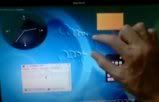 Whilst everyone is gearing up for multi-touch support on the upcoming Windows 7, a group of French developers didn’t want us to forget about Linux. They have shown off a proof of concept multi-touch demonstration which is running on the 2.6.30 Kernel.
The demo shows them using a number of multi-touch gestures, including desktop switching, water ripple effects and rotating and resizing windows. They claim that this is native Linux multi-touch support. It was developed by Mohamed-Ikbel Boulabiar, Stephane Chatty, and Sebastien Hamdani, from the Interactive Computing Lab at the ENAC (Ecole Nationale de l’Aviation Civile) aeronautics academy in Toulouse, France. Read more
Opera Unite turns your browser into a server
June 16, 2009 at 8:29 pm
 Opera launched a new application today called Opera Unite that it hopes will ‘reinvent the web’, their words not ours. This web-based application is an interesting take on cloud computing and comes built into the Opera browser. What Unite does is to turn your computer into a web server and client, which you can use to access files from any other browser (say on a netbook whilst away from home).
Some of the services that are currently offered through Unite includes file sharing, hosting web sites, sharing music or photos, posting sticky notes and chat. Opera realise that many people like to use different browsers, so they have made sure that Unite has cross-platform support. As long as Unite is running on one machine with Opera, then you can access your content on any operating system or browser (or even your phone). Read more
Android on smartbooks is snappier than Windows 7 says Gartner
June 15, 2009 at 2:56 pm
 Smartbook devices are set to become much more commonplace as we reach the end of the year. They run on ARM-based processors and as such feature integrated 3G, GPS, Wi-Fi and Bluetooth on the chip itself. They differ from netbooks in that they are ‘always connected’ to the Internet and are meant to have battery lives lasting between 8 to 10 hours.
As they these chips are not x86, it means running Windows XP, Vista or Windows 7 is not an option. What manufacturers will be able to choose from is a growing stable of netbook-centric Linux distributions (including Android) or Windows CE. Some Gartner analysts have given their own thoughts after checking out a number of smartbook devices running Google’s Android operating system at Computex. Read more

Recent Comments