


Even OEMs forbidden to change Windows 7 Starter Edition wallpaper
June 19, 2009 at 8:46 pm
 We should be thankful that Microsoft finally came to their senses regarding the three-application limit in Windows 7 Starter Edition, which has now been reversed. Windows 7 Starter Edition will mainly be found in netbooks when the operating system launches in October. As a result, the license is expected to be significantly cheaper, than for example, Windows 7 Home Premium.
As a cheaper SKU, you obviously expect some compromise, so that Microsoft can try to up-sell pricier versions of Windows 7. One of these compromises was the three-app limit (now removed) and another is the inability to change desktop wallpaper. We’ve commented in the past how ridiculous this is, but now we have heard that Microsoft has even forbidden its partners and OEM’s to change the wallpaper. Read more
Acer, HP and Lenovo planning 12-inch multi-touch mini-notebooks?
June 19, 2009 at 10:53 am
 There is no doubt that a number of manufacturers are planning to release touchscreen netbooks/notebooks in the fourth quarter, coinciding with the Windows 7 launch. From previous reports, we have heard that a number of panel manufacturers will ramp up production in the second-half of the year.
We are now hearing that Cando, which is a subsidiary of AU Optronics, has landed an order to supply 12.1-inch capacitive multi-touch panels to Acer, HP and Lenovo. According to Digitimes, these panels will start to ship in August, which could mean a year-end launch date for some of these models, although a H1 2010 release is more likely. Cando is the first touch panel manufacturer to receive certification or Windows 7 compatibility.
In related news, EETI (Egalax_empia Technology) is pushing for Windows 7 certification for 10.1-inch and 11.6-inch touch-panels. It is currently sampling touch panels based on analogue matrix resistive (AMR) and projective capacitive technology. The focus for Windows 7 netbooks and mini-notebooks will be on display sizes between 10 to 12-inch screens. It sees Windows 7 certification as a big driver to gain orders.
Corel and ThinkFree launch netbook Office Suites
June 18, 2009 at 8:33 pm
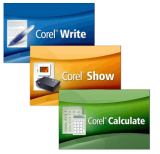 Two companies have announced Office Suites that have been tailored for netbooks. Corel has launched its Home Office Suite targeted for netbooks, which includes three applications to handle word-processing, spreadsheets and presentations. These apps have full support of Microsoft Office and can also export PDFs. The suite is available for download or on a USB stick from Corel and costs $69.99

In terms of technical requirements, you’ll need to have Windows XP (or Vista) installed and also, bizarrely, a screen resolution of 1024 x 768. This is strange considering most netbooks have a resolution of 1024 x 600. Read more
Nvidia: Windows CE performs better than Android on smartbooks
June 18, 2009 at 4:32 pm
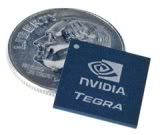 Google’s Android operating system has been getting all of the column inches and hype relating to an eventual transition to netbooks and smartbooks. However, Nvidia feels that Windows CE is the more mature platform, as things stand, for Tegra-based smartbooks.
The Tegra platform is different to ION in that it pairs an ARM-based processor with an Nvidia GeForce GPU (ION pairs an Intel Atom CPU with the Nvidia 9400M graphics). Nvidia certainly has high hopes for the Tegra platform, with its CEO Jen-Hsun Huang predicting that Tegra will benefit from higher margins than its existing products and could contribute as much as half of Nvidia’s revenues within a few years. Read more
Google Android to support multi-touch gestures? [Video]
June 17, 2009 at 12:02 am
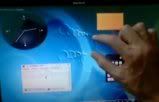 Whilst everyone is gearing up for multi-touch support on the upcoming Windows 7, a group of French developers didn’t want us to forget about Linux. They have shown off a proof of concept multi-touch demonstration which is running on the 2.6.30 Kernel.
The demo shows them using a number of multi-touch gestures, including desktop switching, water ripple effects and rotating and resizing windows. They claim that this is native Linux multi-touch support. It was developed by Mohamed-Ikbel Boulabiar, Stephane Chatty, and Sebastien Hamdani, from the Interactive Computing Lab at the ENAC (Ecole Nationale de l’Aviation Civile) aeronautics academy in Toulouse, France. Read more
Opera Unite turns your browser into a server
June 16, 2009 at 8:29 pm
 Opera launched a new application today called Opera Unite that it hopes will ‘reinvent the web’, their words not ours. This web-based application is an interesting take on cloud computing and comes built into the Opera browser. What Unite does is to turn your computer into a web server and client, which you can use to access files from any other browser (say on a netbook whilst away from home).
Some of the services that are currently offered through Unite includes file sharing, hosting web sites, sharing music or photos, posting sticky notes and chat. Opera realise that many people like to use different browsers, so they have made sure that Unite has cross-platform support. As long as Unite is running on one machine with Opera, then you can access your content on any operating system or browser (or even your phone). Read more
Android on smartbooks is snappier than Windows 7 says Gartner
June 15, 2009 at 2:56 pm
 Smartbook devices are set to become much more commonplace as we reach the end of the year. They run on ARM-based processors and as such feature integrated 3G, GPS, Wi-Fi and Bluetooth on the chip itself. They differ from netbooks in that they are ‘always connected’ to the Internet and are meant to have battery lives lasting between 8 to 10 hours.
As they these chips are not x86, it means running Windows XP, Vista or Windows 7 is not an option. What manufacturers will be able to choose from is a growing stable of netbook-centric Linux distributions (including Android) or Windows CE. Some Gartner analysts have given their own thoughts after checking out a number of smartbook devices running Google’s Android operating system at Computex. Read more
MSI UK responds to Microsoft’s hybrid netbook ban
June 12, 2009 at 6:35 pm
 Last week we reported on a story that Microsoft was looking to ban netbook manufacturers that produce hybrid storage netbooks whilst running Windows XP. The only major netbook that this really affects is the MSI Wind U115 Hybrid, which uses a 8GB SSD and 160GB HDD. We have now had official word from MSI that confirms Microsoft’s stance.
Richard Stewart, MSI’s UK Marketing Manager, confirmed to us that it will not be removing the U115 Hybrid netbook from retailer’s shelves. “MSI will continue to sell the U115 until our current stock in the UK (and WW) has been sold,“ Stewart said. He did, however confirm that production of the U115 Hybrid will cease at the end of July at Microsoft’s request. What this means is that if you are considering this product then you better not hang around for too long. Stewart even feels that the U115 Hybrid will become a “special limited edition” product.
MSI kindly sent us a review sample of the U115 Hybrid and we should have some unboxing pictures for you tomorrow.
Windows 7 will ship browser-less in Europe
June 12, 2009 at 6:13 pm
 Microsoft will ship Windows 7 without Internet Explorer 8. This is in response to the EU’s antitrust investigation into its bundling of its browser with Windows. This version will be called Windows 7 E. It will be exactly the same as other Windows 7 versions available in other regions and will only differ with the removal of IE8.
This will apply to both OEM and retail versions, meaning that the question now asked is how will you stick a browser onto your new system without a browser? OEMs will have the option to add the browser back in, ship another browser, or ship multiple browsers. “Computer manufacturers will be able to add any browser they want to their Windows 7 machines, including Internet Explorer, so European consumers who purchase new PCs will be able to access the Internet without any problem. Consumers will also be able to add any Web browser to their PCs, to supplement or replace the browsers preinstalled by their computer manufacturer,” said Dave Heiner, Vice President and Deputy General Counsel. Read more
Atom N270/N280-based netbooks unlikely to get Windows 7
June 12, 2009 at 3:12 pm
 Netbook manufacturers may end up keeping any models based on Intel’s N270 or N280 Atom processors running on Windows XP rather than upgrade to Windows 7. The rationale behind such a move is that due to intense competition in the netbook segment, putting prices up (as would be the case with Windows 7) would put them at a strategic disadvantage.
It is believed that the latest quotes from Microsoft on Windows 7 is around the $45-$55 mark. This compares to the OEM price of Windows XP which is around $25-$30. Although, other rumours have pointed to an XP price as low as $15. The top manufacturers are still negotiating with Microsoft to try and bring the price down.
However, vendors do not see Windows 7 being a big selling point when it comes to netbooks as they believe that most consumers believe Windows XP is good enough for a netbook. At the moment, Windows 7 is only being considered for the next generation of Atom ‘Pineview’ processors including 1.66GHz Atom N450 based devices.
Update: Samsung has said that it “will run Windows XP for as long as we can,” speaking to Laptop Mag. It said that as things stand, it wasn’t convinced of Windows 7 Starter Edition.
Via Digitimes.
Intel’s take on restricting netbooks to 10.2-inches
June 11, 2009 at 5:25 pm
 Intel was accused of colluding with Microsoft from some quarters when supposed maximum specifications for Windows 7 Starter Edition were revealed. These specs relate to being able to stick Windows 7 Starter Edition on a netbook, which is likely to be a much cheaper proposition than using more expensive Windows 7 SKUs such as Home Premium.
Whilst most of the specs were very similar to that seen currently (for XP), there was one significant change. To get a discounted Windows XP licence, a netbook can be no bigger than 12.1-inches, however to qualify for Windows 7 Starter Edition license this screen size requirement has been reduced to just 10.2-inches. Some say that this has been done to limit cannibalisation of notebooks, which have been hit hard from the growth of the netbook segment. Read more
Intel’s next-gen Pineview CPU “not validated” for Windows 7 Home Premium
June 7, 2009 at 9:52 am
 Intel is not validating its next-generation of processor, dubbed Pineview, for Windows 7 Home Premium or higher according to a spokesman. What this basically means is that the Pineview processor will only be intensively tested with the Windows 7 Starter and Home Basic Editions.
Intel claims that Home Premium is not “the right solution” for netbooks, so you’ll you have to install it at your own risk when the new Pineview CPUs appear in netbooks at the end of the year. “We are not going to validate it with Home Premium because we don’t believe it’s the right solution (for a netbook)” says Mooly Eden, VP of Intel’s Mobile Platforms Group. Read more
Video: Mtube II reveals XP netbook/Android tablet hybrid
June 6, 2009 at 6:06 pm
 Taiwan’s Institute for Information Industry (III) showed off a very intriguing device at Computex this week. In a form factor that reminded me of Always Innovating’s Touch Book, the Mtube II is a netbook that has a detachable keyboard, which means it can also be used as a tablet device. However, by taking this concept one step-further, the Mtube II runs two different operating systems – Windows XP in netbook mode and switching to Android when in tablet mode.
It seems that the device has two processors, the old 1.6GHz VIA C7-M CPU for netbook mode and a 533MHz Samsung ARM processor when running Android in tablet mode. Thankfully the model has a matte display, which should hopefully mean less fingerprint marks. The tablet connects to the netbook by VNC (remote control) so video performance probably won’t be up to scratch. Battery life in tablet mode is around two hours.
This model is only a prototype and a final retail version is unlikely to be out until next year and as you can imagine there’s no idea on price right now. We’re very much looking forward to seeing more devices sporting this form-factor in the future. Check out three videos of this device in action after the break. Read more
Opera 10 Beta – a worthy browser for your netbook
June 5, 2009 at 11:19 pm
 The Opera 10 Beta is now been released for public consumption. For those of you that have steadfastly been happy with Firefox, Google Chrome, Safari or even Internet Explorer, now is the perfect time to take Opera for a test drive. The reasons to do so become even more important to a netbook user when you consider the improvements that have been made.
One of the biggest is Opera Turbo, which uses special compression technology to boost browsing speeds when using dial-up connections. How this works is that web pages are sent to Opera’s own servers first which compress them by up to 80% before they hit your browser. One obvious area where this will come in very handy is in mobile devices and netbooks. Read more
Acer Android netbook to dual-boot with Windows
June 5, 2009 at 11:21 am
 Acer is looking to play it safe with its planned Android netbook, due for release in the third quarter this year. The netbook will ship as a dual-boot system with both Android and Windows according to Acer Chairman, JT Wang.
Acer is looking to go down this route given that there are still questions marks about the Android platform on a netbook type device. From our point of view, it’s a bit worrying that we haven’t seen a proper netbook customised version of Android. The only demos shown up until now are ports of the smartphone version (typically v1.5). Read more

Recent Comments